Reading List Planning & everyday tools
From a reading spreadsheet to somewhere I want to return.
A private site for books and magazines, preserving the distinctions that a simple reading counter misses.
Project statusPrivate site
How it came about
This started with an existing reading spreadsheet. I already had the information; I wanted a better way to use it. Books and magazine issues needed to be easier to browse, update and return to without turning the record into a maintenance exercise.
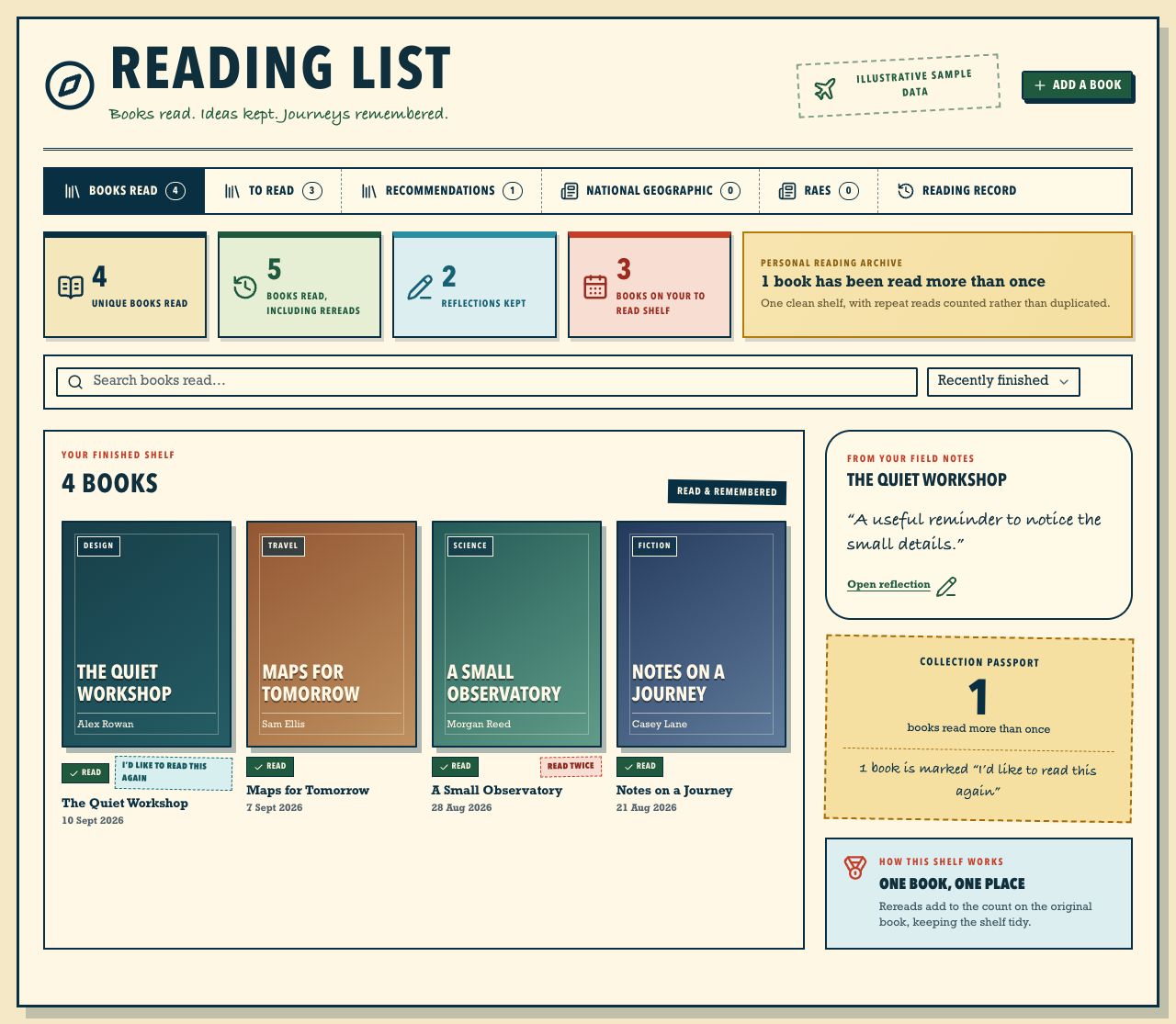
The resulting site brings books and magazine issues into one reading tracker. It has different views for different kinds of reading, rather than forcing everything into one long list. I wanted browsing the collection and updating an entry to feel like part of reading, rather than another administrative task.
The difficult part
The migration was the important part. Owning a book, wanting to read it, finishing it and reading it again are different facts. Magazine issues also have a calendar structure that a book list does not. A tidier interface would not be an improvement if it flattened those distinctions.
I have had to think about incomplete dates, repeat reading and which source information needs to survive an import. The screen should help me understand the record rather than quietly filling gaps with guesses. The original source also needs to remain recoverable.
What I learnt
I have learnt that a small personal tool can deserve the same care as a much larger application. The difficult work often lives in the meaning of a field, not the number of features.
It has also made me think more carefully about what a reading record is for. A total can be interesting, but remembering an earlier read or finding the right issue is often more useful. The aim is a tool I can keep returning to, without having to reconstruct the meaning of the information each time.