Ralph Hospital Games & learning
Building a hospital adventure from Ralph’s point of view.
A native Unity game prototype about exploring a hospital, visiting its wards and helping the people Ralph meets.
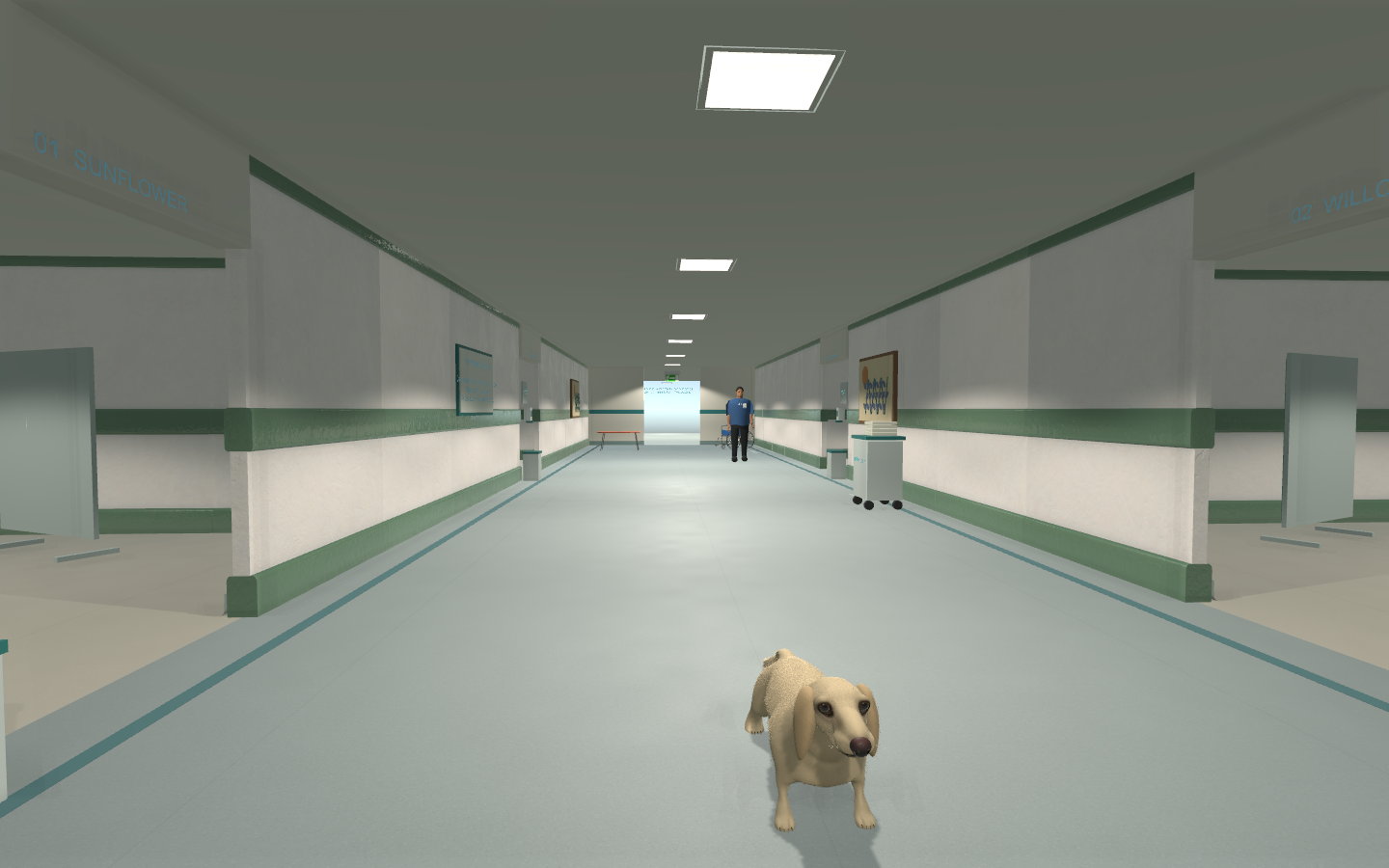
Project statusNative Unity prototype, version 0.10.0; unfinished game
How it came about
I wanted to build a game around the small adventures of a dog. That led to Ralph Hospital: a native Unity prototype where Ralph explores a hospital, visits its wards and helps the people he meets. The setting gives the wandering a purpose without turning every moment into a race.
The project has grown into connected spaces, different floors, encounters and small errands. It is a separate project from the earlier Long Live Ralph browser game and the illustrated storybook, but shares the interest in building a recognisable world around Ralph. The hospital prototype gives that idea a place to explore.
The difficult part
A dog-height camera makes the environment feel different, but it also makes a corridor surprisingly difficult to get right. The camera needs to follow Ralph without being blocked by walls, getting stuck at corners or losing him when he changes direction. I have compared different follow behaviours through the same routes instead of judging them from one attractive still.
Ralph himself has needed repeated work on the face, body, coat and movement. Small changes can alter the character more than an extra room or activity. The wider game also needs dependable progress: an errand should survive a break, and returning to a saved session should put the player back somewhere that makes sense.
What I learnt
I have learnt to make the comparison repeatable. Fixed camera views help me see whether a model change is actually better. Walking the same route exposes problems that disappear when I keep changing the test. Looking at the face, movement, camera and environment separately makes the next decision clearer.
The game is still a prototype, and there is more work to do on how it feels to play. Having connected hospital spaces, encounters and saved progress gives me something concrete to assess. I want each next change to make exploring with Ralph more convincing, whether that means improving a movement, a room or a small interaction.